
Cashmere sweater costs:
what affects
your quote?
Understand the product and order details behind a manufacturing quotation.
A cashmere sweater quote depends on the selected yarn, garment specifications, work involved and order details. “100% cashmere” alone does not define the product. At YUMARCH, specific prices are confirmed for each project after we review your requirements.
1. Composition and yarn define the material cost.
Start with the fibre composition and percentages: 100% cashmere, wool, or a specified blend. Different yarn specifications have different costs, so composition needs to be considered alongside the selected yarn and the amount used.
Two yarns labelled 100% cashmere can still differ in fibre specifications, yarn count, ply and spinning requirements. Changing a blend percentage changes the material specification; the price difference needs to be checked against the actual yarn options.
Include a yarn reference if you have one. Otherwise, describe the handfeel and appearance you want. Custom spinning or colour development should be discussed with the order requirements so that any additional work is included in the quotation.
2. Gauge affects how the garment is knitted.
On V-bed flat knitting machines, gauge describes the number of needles per inch. Higher numbers indicate a finer needle spacing. It is a machine specification, rather than a garment weight or quality grade. SHIMA SEIKI’s knitting glossary explains the gauge terminology.
Gauge needs to work with the yarn and stitch. It affects the knitting setup, while the actual design determines the work involved. A finer gauge does not automatically mean a more expensive sweater, and a coarser gauge does not automatically mean a cheaper one.
We consider yarn consumption and the knitting and making requirements together. YUMARCH works across 3–16 gauge knitwear. If you are unsure which to request, send a reference and describe the intended texture and weight.
3. Weight helps define the yarn requirement.
For otherwise comparable garments using the same yarn, a heavier knitted garment generally requires more yarn. A longer body, larger measurements or a different stitch structure can change consumption. That affects the material portion of the quote.
Always associate a target weight with a reference size and measurements. A weight in grams per garment is different from fabric weight in grams per square metre. Tell us which measurement you are providing.
Finished garment weight is a useful reference, but production costing also needs to account for yarn allowances during making and finishing. Buttons, zips or other trims can contribute to the finished weight without being yarn.
Why weight alone is not a price formula
Making the body longer may increase yarn use even if the composition and gauge stay the same. The total price also includes knitting, garment making, finishing and the agreed extras, so a percentage change in weight does not translate directly into the same percentage change in price.
4. Construction and finishing add work.
The quotation needs to reflect the steps required to make the garment. Stitch patterns, colourwork, shaping, pockets and other details can change programming, knitting time, material use and assembly work. Their effect depends on the actual construction and feasibility.
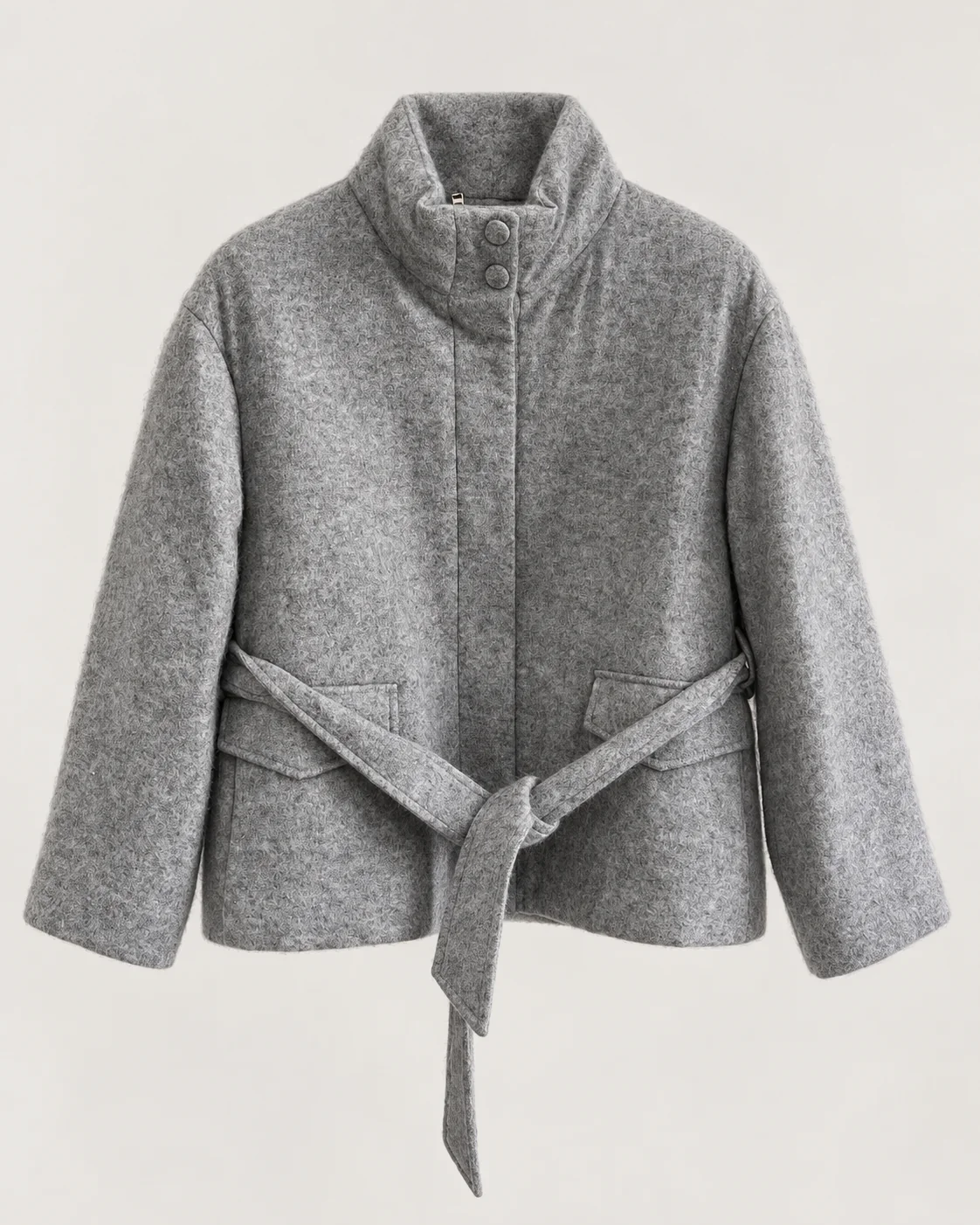
A cardigan with a fastening and pockets has different making requirements from a plain pullover. Neckline construction, linking, seams, trims, washing and finishing also need to be specified. Describe the result you want so the sample and quote can be reviewed against the same brief.
If you choose from our basic styles, use that style as a starting point and list the changes you want. Yarn, fit or detail changes still need to be reviewed before the price is confirmed.
YUMARCH works hand in hand with our family factory in Qinghe, China. Our capabilities include raw material sourcing, in-house yarn spinning, colour development, knitting, garment making and finishing, alongside development and sampling.
See the development and production process5. Quantities and colour splits affect the run.
Development and production preparation involve work for each style. Repeating an agreed style across more pieces can spread some preparation costs over a larger run. Dividing an order among more styles or colours changes the preparation, material planning and production arrangement.
The total number of pieces alone does not describe that work. For example, 100 pieces of one style in one colour and 100 pieces divided between two styles need separate quotations. Increasing quantity does not guarantee a fixed discount; ask for a quote for each quantity plan you are considering.
Orders start from 50 pieces per style, and colour splits can be discussed. Small runs can be discussed alongside your material and size requirements. A one-style, two-colour order at 50 pieces per colour totals 100 pieces.
Tell us whether you want to review available colours or develop a custom colour. Custom spinning or dyeing, where required, is assessed for the particular project.
Review small-run quantity optionsCompare the same product and scope.
Keep one version of the specifications for each comparison. Confirm the same composition and yarn, gauge, stitch, reference size and weight, measurements, colour split and production quantities. Review any proposed changes before treating two prices as equivalent.
- Confirm the currency, price per piece and quantity basis.
- Check which labels, trims and packing are included.
- Discuss development and sample fees separately from the bulk unit price, including the scope of revisions.
- Check whether shipping, testing or inspection is included or quoted separately, and agree the delivery terms.
- Confirm payment terms, quotation validity and the schedule.
Specific prices, sample arrangements and delivery schedules are confirmed by project. If you change the yarn, weight, design or order breakdown after receiving a quote, ask us to review the price before you proceed.
Send a brief we can work from.
Include your style or basic-style request, composition, gauge and target weight if known, reference size, colours, quantities, labels, packing and delivery requirements. Mark undecided details “to be confirmed”.
Use the copyable quote checklist
Plan sampling and sample approvalGet a quote for your project.
Share your specifications or ask for basic style options. We will work through the product details and confirm pricing for your planned order.
Request a project quote